The history of Electric Arc Furnace Steelmaking
The electric arc furnace was developed by France’s Paul Héroult between 1888 and 1892. By utilizing the intense heat generated by electric arcs between electrodes, he discovered an alternative energy source to coal and invented the first arc furnace for direct smelting. In 1907, the United States established the first commercial electric arc furnace plant, marking the official beginning of industrial-scale application.
Technological Leap in the Ultra-High Power Era (1960s-1970s)
In the 1960s-1970s, the electric arc furnace (EAF) steelmaking technology saw a significant leap. With the development of ultra-high power (UHP) power supply and related technologies, high-power arc furnaces (HP) and ultra-high-power arc furnaces (UHP) emerged, distinguished from regular-power arc furnaces (RP) mainly by the transformer capacity configured per ton of furnace volume. The advent of UHP EAFs meant a substantial increase in thermal energy input into the furnace per unit time, thus significantly shortening melting time and improving production capacity. Meanwhile, electrode consumption, heat loss, and power consumption were reduced, leading to a substantial cost decrease while enhancing productivity.
During this period, a series of supporting technologies for UHP EAFs were widely applied, including high-voltage long-arc operation, water-cooled furnace walls, water-cooled furnace covers, foamy slag technology, and external heat source-assisted melting. Ladle refining and intensified oxygen-using technologies were also introduced, further enhancing the quality and efficiency of EAF steelmaking.
The Role of Graphite Electrodes in EAF Steelmaking
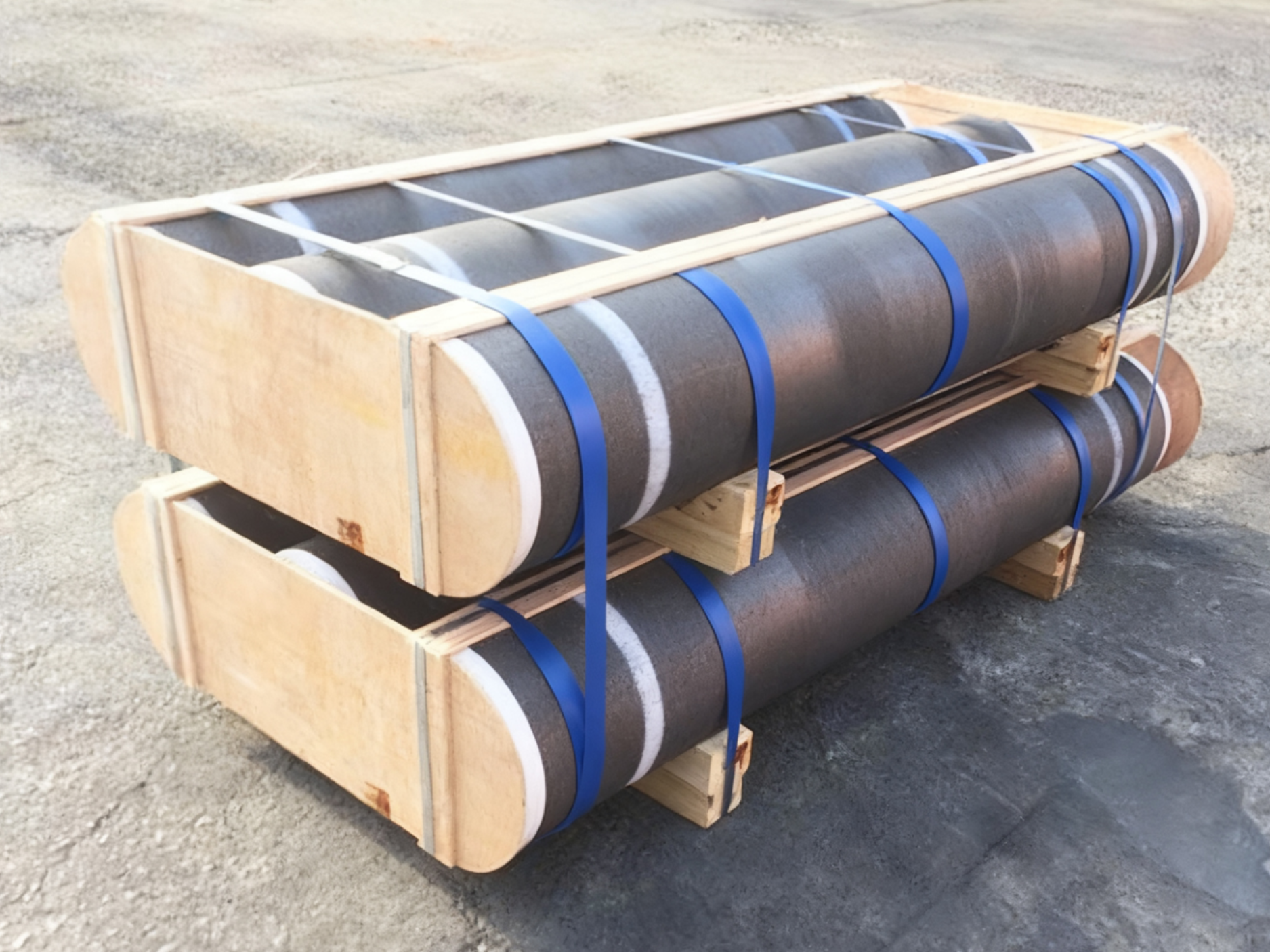
Electric Arc Furnace (EAF) steel making is a highly efficient and sustainable method of producing steel, primarily using recycled scrap metal. The critical consumable of this process are graphite electrodes, which serve as the essential conductive components that generate the intense heat required to melt steel.
1. How Graphite Electrodes Work in an EAF
In an electric arc furnace, graphite electrodes are responsible for:
- Conducting electricity – They carry high-current electricity (up to 100,000 amps) from the power source into the furnace.
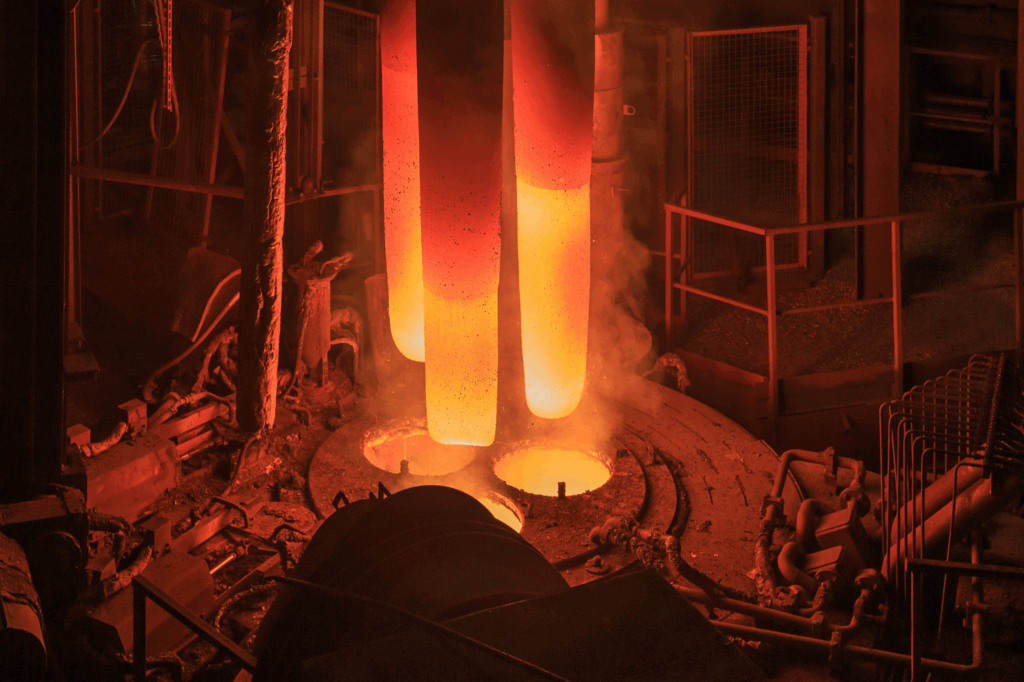
- Generating heat – When the electrodes strike the scrap metal, they create an electric arc with temperatures exceeding 3,500°C, melting the steel efficiently.
- Maintaining stability – High-quality graphite electrodes resist thermal shock and oxidation, ensuring consistent performance over long production cycles.
2. Why Graphite is the Ideal Material
Graphite electrodes are preferred in EAF steelmaking due to their unique properties:
✔ High electrical conductivity – Ensures efficient energy transfer.
✔ Exceptional thermal resistance – Withstands extreme furnace temperatures.
✔ Mechanical strength – Resists breakage under high current loads.
✔ Chemical stability – Does not react with molten steel, preventing contamination.
3. Impact on Steelmaking Efficiency
- Faster Melting – Ultra-High Power (UHP) graphite electrodes enable shorter melt times (~45-60 minutes per batch).
- Lower Energy Consumption – Optimized electrodes reduce power losses, cutting electricity costs by 5-10%.
- Reduced Electrode Consumption – Advanced coatings and joint technologies minimize oxidation and breakage, lowering operational costs.
Challenges & Innovations in Graphite Electrode Technology
1. Key Challenges
- High Cost – Premium needle coke (raw material) prices fluctuate, affecting production costs.
- Oxidation & Wear – Prolonged exposure to heat and oxygen leads to electrode degradation.
- Supply Chain Dependencies – Many manufacturers rely on imported high-quality graphite.
2. Technological Advancements
To overcome these challenges, the industry is adopting:
🔹 Anti-Oxidation Coatings – Aluminum or ceramic coatings extend electrode lifespan.
🔹 Larger Diameter Electrodes – Reduce breakage and improve current density.
🔹 Smart Electrode Control Systems – AI-driven adjustments optimize arc stability and energy use.
The Future of Graphite Electrodes in EAF Steelmaking
As the steel industry shifts toward green steel production, EAFs (which emit 75% less CO₂ than blast furnaces) will play a bigger role. Graphite electrodes will continue evolving with:
✅ Sustainable Manufacturing – Recycling used electrodes and adopting bio-based binders.
✅ Higher-Performance Materials – Nano-enhanced graphite for longer service life.
✅ Integration with Renewable Energy – Optimizing electrodes for use with solar/wind-powered EAFs.
Conclusion
Graphite electrodes are the backbone of electric arc furnace steelmaking, enabling fast, energy-efficient, and eco-friendly steel production. As technology advances, their performance will further improve, supporting the global transition to low-carbon steelmaking.
For high-quality graphite electrodes tailored to your EAF operations, contact us today to learn how we can optimize your steel production process.
Call to Action
🔹 Need reliable graphite electrodes? Get a quote now!
🔹 Want to improve EAF efficiency? Explore our advanced electrode solutions.
Copyrights © 2026 shanchuncarbon. All rights reserved.